
DAHOMEYAN KINGS' REPLY TO GROWTH
This suggestion is based on a text and images easily found on the web. The point is to show how easy it is to see the past differently, by asking new questions and reading attentively.
* *
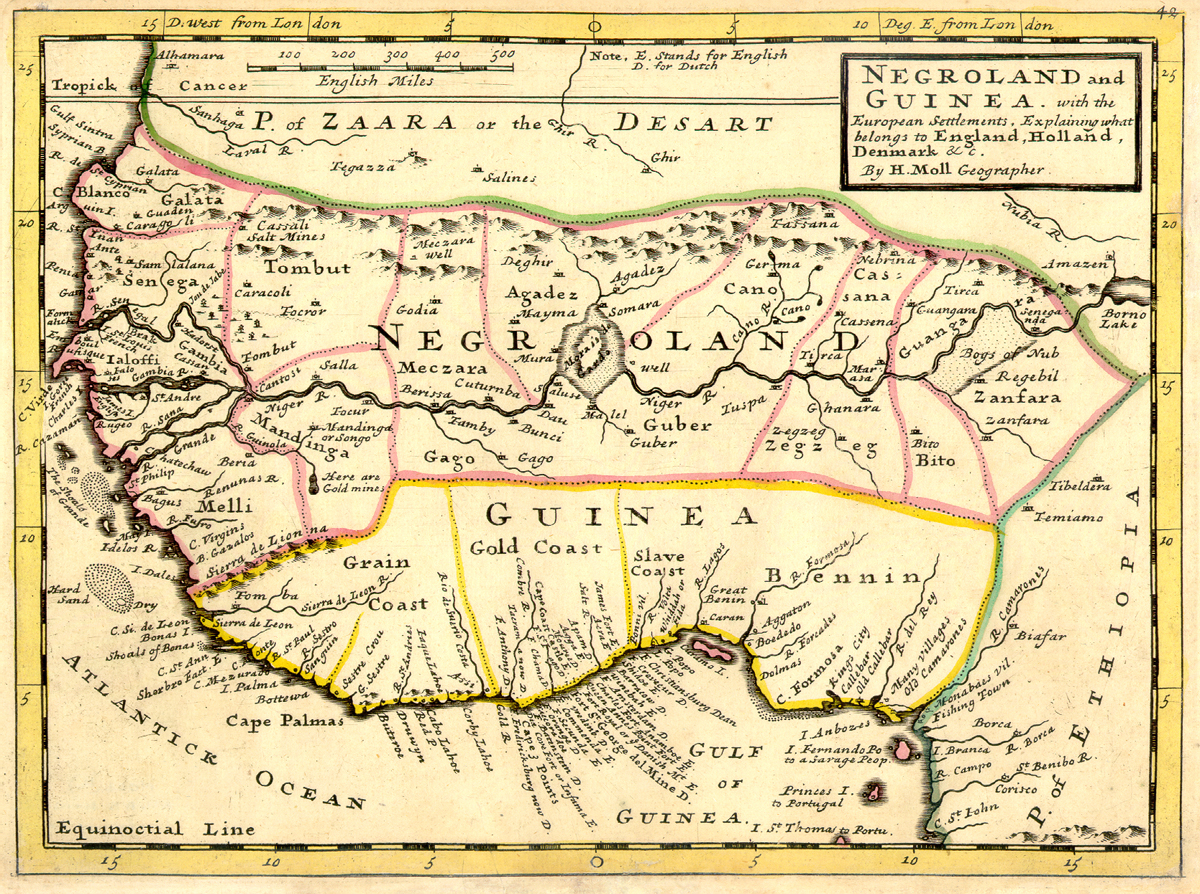
Dahomey's conquest of the coastal kingdoms (Adrah and Whydah, in 1724-1727) brings direct contact with the whites, so economic growth.
 |
The West African Coast in 1736 / zoom |

The Kingdom of Dahomey in 1793 / zoom
Then its kingship changes.
To facilitate their control, the victors for a time accept the local belief that pythons bring wisdom, fertility and cosmic harmony. (That they kill rats may be the origin of that faith.)

Couronnement du roi de Juida [Ouidah, sur la côte de Bénin] en avril 1723 par Jacob van der Schley / zoom

Then they replace the pythons with the ancestors. As humans they are more powerful, and the kings are their descendants.
The new investitures at Whydah are about them. Drawings of 1851 —
- A procession shows their wealth.
_p2.322_PROCESSION_OF_THE_KINGS_WEALTH,_EK-BAH-TONG-EK-BEH.jpg) |
Zoom (ask for permission to use) |
- Ten captives are killed, to carry messages to the ancestors and become their servants.
_p2.335_THE_PLATFORM_OF_THE_AH-TOH%20(1).jpg)
- Notice the ships.
_p2.345_THE_HUMAN_SACRIFICES_OF_THE_EK-CNEE-NOO-AH-TOH.jpg) |
| Zoom |
* *
West Africa exported palm oil, the demand for which greatly increased with the Industrial Revolution, to grease machinery and make soap for urban populations. The Dahomeyan king created huge palm-tree plantations, but as those trees grew everywhere he could not monopolize oil production or sale. Independent producers were rivals.
In 1853 the king sacrificed 300 captives rather than sell them to those challengers, in a holocaust that emphasized his power. Though due to particular circumstances the drama shows the menace of independent economic forces, the violence used against them, how the event reinforced authority and how by erasing wealth that otherwise would be invested, it reinforced the status quo.
.jpg)
Sacrifice humain au Dahomey en 1863, "Le Tour du Monde"
Back to the Sun King.
End of this section.
* * *
Next section,



_p2.335_THE_PLATFORM_OF_THE_AH-TOH.jpg)
_p2.345_THE_HUMAN_SACRIFICES_OF_THE_EK-CNEE-NOO-AH-TOH.jpg)
No comments:
Post a Comment